
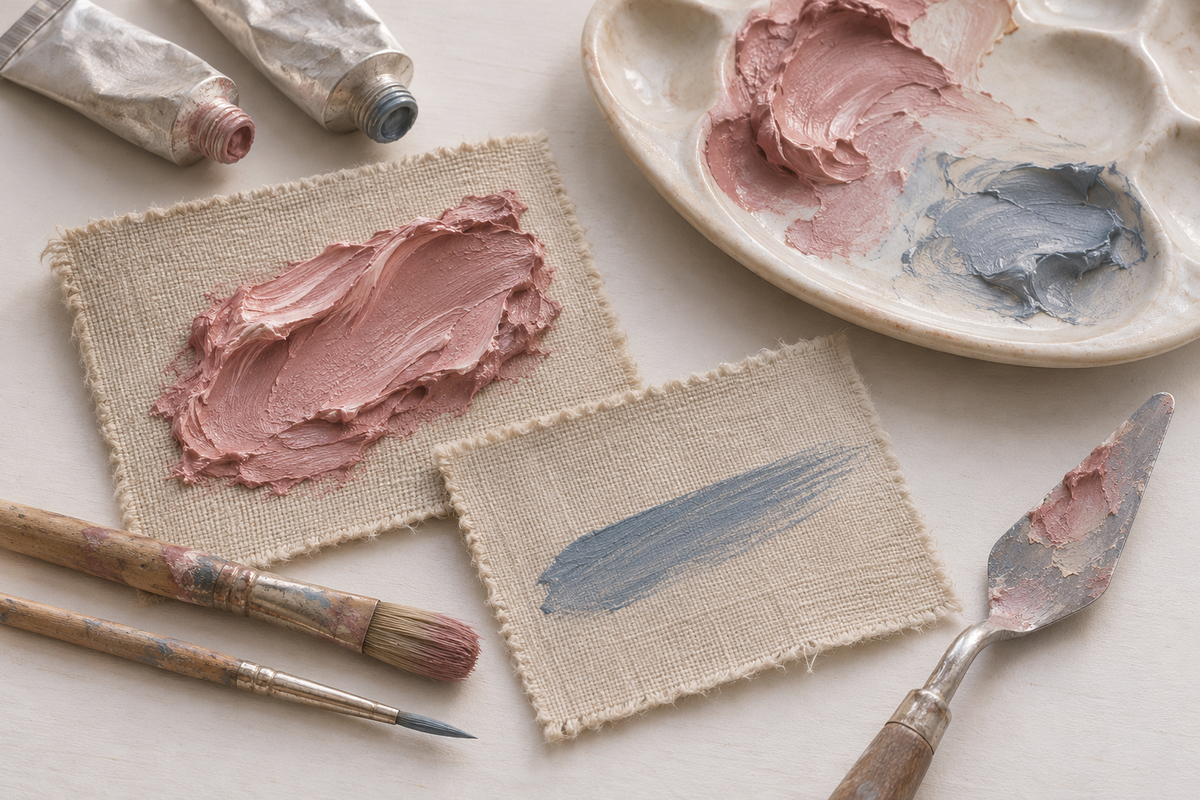
The binder makes a difference
Paint is more than pigment. Its binder holds the particles together and connects them to the support. Conventional acrylic paint forms an acrylic polymer film as water evaporates. Oil paint sets through drying oils reacting with oxygen. These processes influence how the materials behave during painting and curing.
Time shapes the working process
Acrylic often becomes touch-dry relatively quickly, supporting rapid layering. Oil commonly remains workable for longer, allowing extended blending. Actual timing depends on colour, layer thickness, additives and conditions. The medium alone cannot establish a reliable delivery date or full curing time for a particular painting.
Look beyond simple categories
Acrylic need not look flat, and oil need not be glossy. Thin glazes, visible brushwork and thick passages are possible with different materials. Mediums, supports and artistic decisions affect the result. A good detail photograph therefore tells you more about visible character than the words “oil” or “acrylic” alone.
Look at transitions, reflected light and the edges of individual marks. Are you drawn to a quiet surface or one that changes with your viewing angle? An original often reveals itself through the relationship between its overall presence and its close-up detail.
Which medium should you choose?
There is no universal winner for a personal collection. A work’s price or artistic value cannot be inferred from the binder alone. Consider the subject, size, support, surface and intended placement instead. If a painting speaks to you, its medium is part of its story, not a quality certificate in itself.
Check the details before buying
A useful product page should clearly identify the medium, dimensions, support, condition and delivery scope. Check whether a pictured frame is included or merely part of a staged setting. Ask for clarification before purchasing. Our current examples illustrate these details; they are not purchasable originals and do not establish the real materials used by Sarelle.